
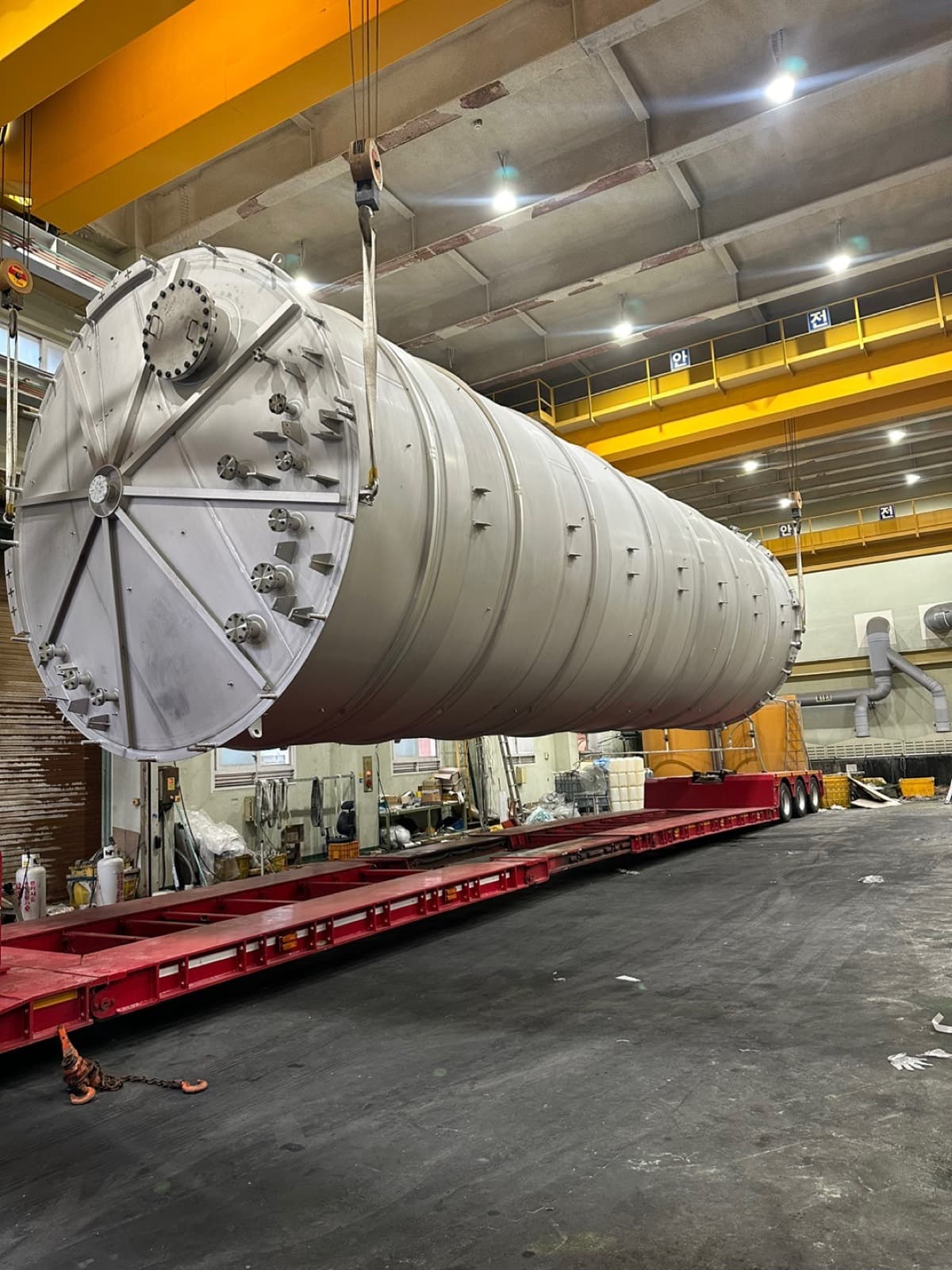
Founded in 2018, focused on SUS fabrication for semiconductor E.P and lining
Skilled weld-bead quality and controlled finishing support large vessels, filter housings, heat exchangers, food machinery and project-specific quality documentation.
Quickly access the materials needed for procurement and engineering review.
Company information, fabrication capabilities, quality and certification, project references and inquiry resources are organized by purpose.
Procurement & supplier review
Review company information, manufacturing capability, project records and quality/certification resources.
View resourcesEngineering & capability
Review the seven-stage manufacturing flow, key equipment and project-specific inspection requirements.
View resourcesCompany profile
Review company overview, core business, key projects and certifications in one place.
View resourcesQuality & confidential data
Review certifications, quality-control flow and handling guidance for customer drawings and confidential data.
View resources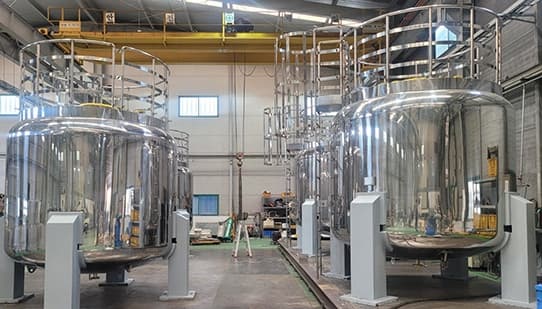 SPEED · DETAIL · QUALITY
We lead with products and verifiable manufacturing evidence.
S&D KOREA focuses on pressure-vessel and storage-tank manufacturing, with semiconductor, chemical and pharmaceutical projects as priority industries. SPEED & DETAIL reflects responsive customer support and close control of fabrication detail.
Our priority is to carry the project specification consistently through drawings, materials, fabrication, inspection and quality documentation for dependable delivery.
From E.P and lining to large SUS and food equipment
E.P and lining tanks for semiconductor processes are the core business, with welding and finishing capability extended to filter housings, heat exchangers, pressure vessels and food-process equipment. SUS and carbon-steel components and structures are reviewed within project scope.
E.P · LINING · LARGE SUS
E.P & Lining Tanks
Fabricated around material, lining, surface-finish and inspection requirements for semiconductor and high-purity chemical processes.
Large SUS & Pressure Vessels
Capacity, material, design pressure and temperature, nozzle/manhole and transport conditions are reviewed project by project.
Filter Housings & Heat Exchangers
SUS components and process equipment are fabricated around visual quality, process duty and inspection scope.
Food Machinery & SUS Conveyors
Transfer height, throughput, hygiene, washdown, guarding and line interfaces are incorporated.
Projects move through seven stages from engineering review to inspection.
The process covers engineering and drawing review, cutting, forming, machining, welding, surface finishing and inspection. S&D performs tank welding in-house. Buffing and polishing are also based on our own capabilities, with any specialist partner scope defined clearly for each project.
Engineering & drawing review
Engineering is performed in-house or fabrication is reviewed against customer-supplied drawings.
Material cutting
Cutting is handled in-house or by qualified outside processing depending on project and material conditions.
Material forming
Bending may be performed in-house or externally; formed heads are outsourced.
Machining & fabrication processing
Required machining and processing are performed in-house or externally according to project requirements.
Welding
Core welding operations are performed in-house by S&D.
Surface treatment
Buffing may be in-house or outsourced; painting and acid cleaning are handled externally.
Inspection
Inspection is performed in-house, with the detailed scope finalized to project requirements.
Annual project records show the breadth of delivery experience.
Annual projects and fabrication quantities show S&D KOREA's delivery experience. Detailed specifications and customer drawings are handled separately to project confidentiality requirements.
projects · 63 units
projects · 174 units
projects · 191 units
projects · 94 units
projects · 76 units
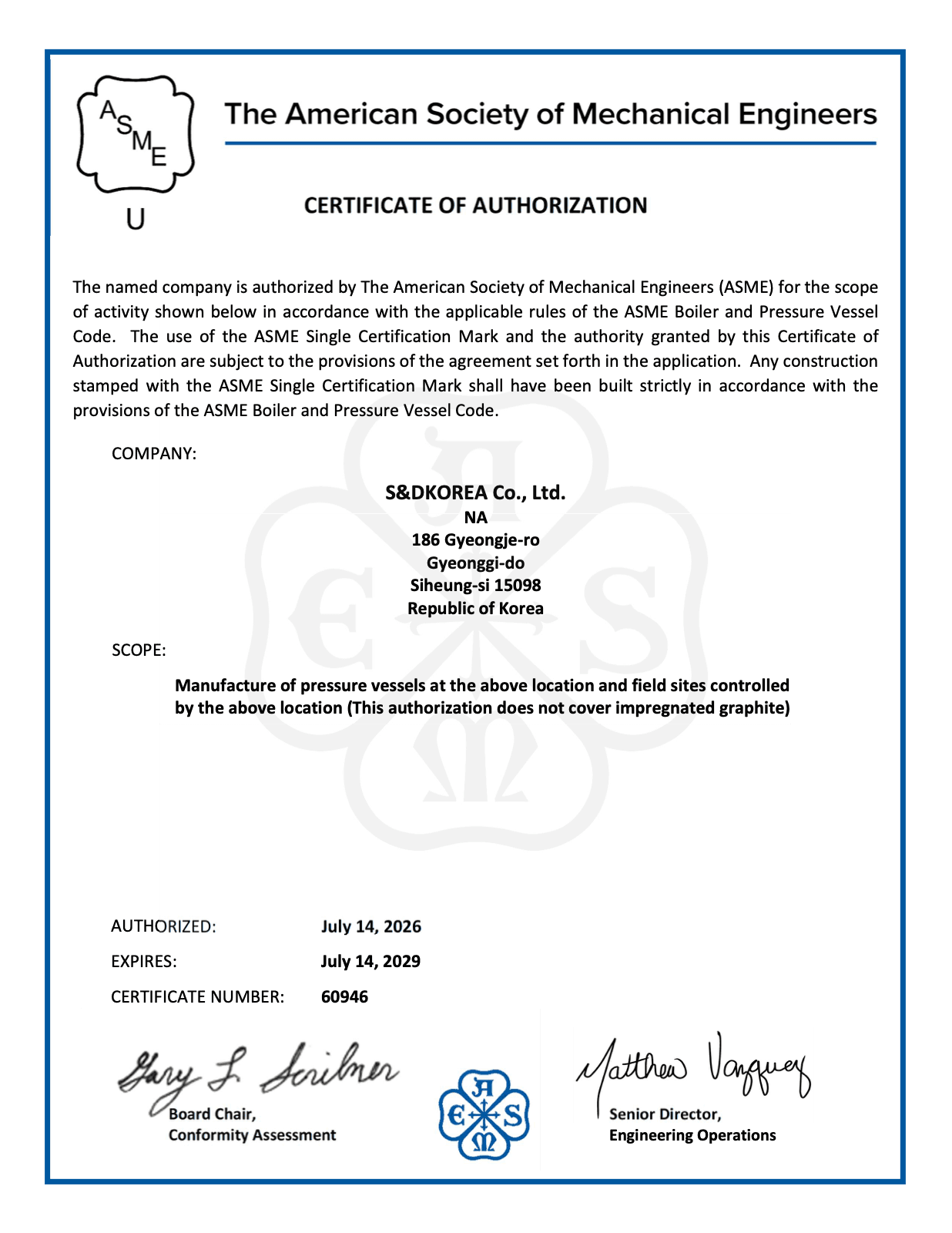
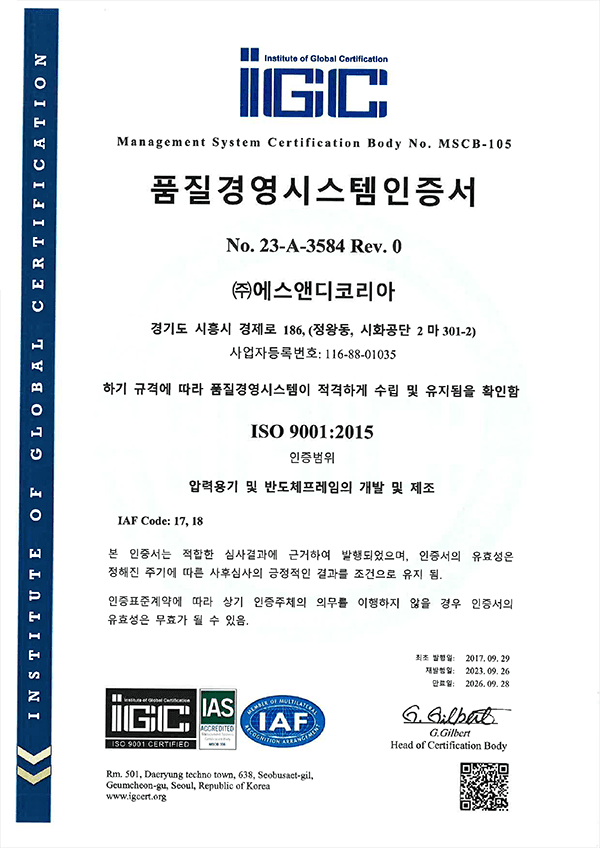
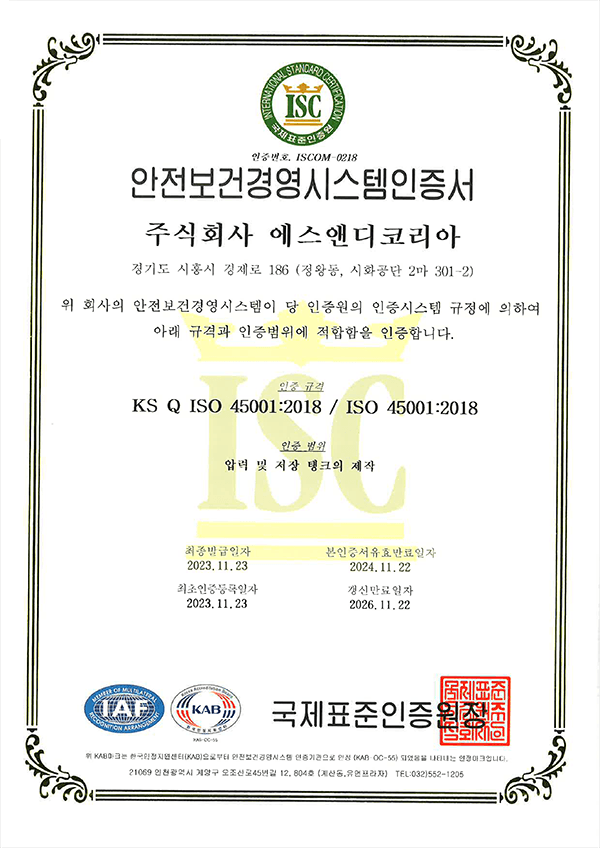
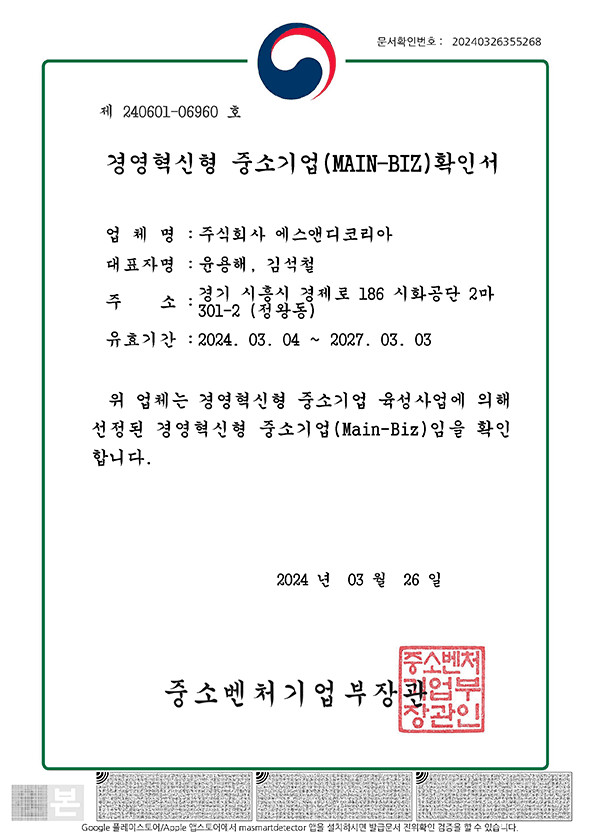
Certifications and core patents supporting quality, safety and innovation
Review key certification numbers, scope and validity with access to source documentation. Public patent presentation focuses on two core registered patents.
Start quotation review with five core technical inputs.
Material, capacity/dimensions, design pressure/temperature, quantity and target delivery are enough to start. Final drawings are not required for the first review.